革には大きく分けて2種類の鞣し方がある。クロム鞣しとタンニン鞣しだ。
クロム鞣しは化学薬品を使って短時間で加工する方法で、柔らかくて均一な仕上がりになる。安価で大量生産に向いているため、市場に出回っている革製品のほとんどはこちらだ。
タンニン鞣しは植物の渋み成分(タンニン)を使って、時間をかけてじっくり加工する方法だ。硬くてしっかりとした質感で、使い込むほどに色が深まり、手に馴染んでいく。いわゆる「エイジング」と呼ばれる経年変化が楽しめるのがこの革だ。
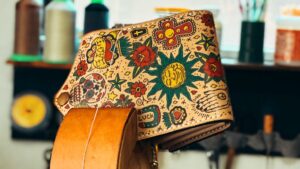
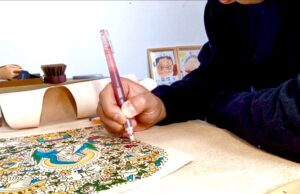
CBRO.mがタンニン鞣し革を選ぶ理由は単純だ。手描きに向いているからだ。
染料が革の繊維にしっかり入り込むため、発色がいい。表面に張りがあるため、細かい線も描きやすい。そして何より、使い込むほどに絵が革と一体化していく。新品のときとは全然違う表情になる。それが面白い。
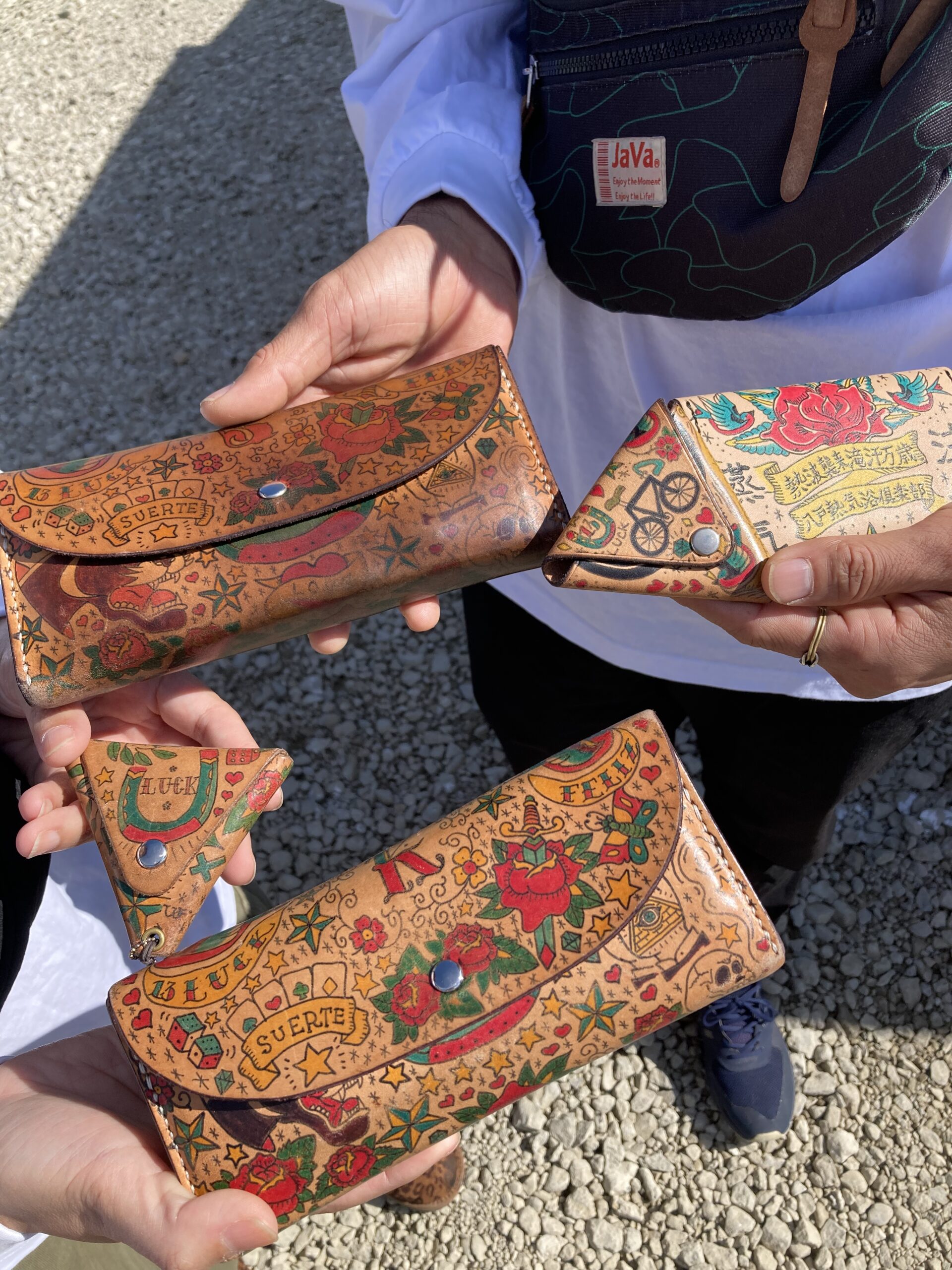
革の色は使うほどに飴色になり、絵に施した染料は徐々に抜けていく。色が抜けているのに革の色の濃さで新品の時にはなかった絶妙な色合いになる。
自分が歳を重ねるのと同じように、革にも絵にも味が出てくる。時間が経つほどに愛くるしくてたまらない相棒になるだろう。
量産品には出せない変化がある。自分だけの育ち方をする革。それがCBRO.mが一点物にこだわる理由でもある。
There are two main ways to tan leather. Chrome tanning and vegetable tanning.
Chrome tanning uses chemicals to process the hide quickly, resulting in a soft, uniform finish. It’s cheap and suited for mass production — which is why most leather goods on the market are made this way.
Vegetable tanning uses plant-based tannins, processed slowly over time. The result is firm, structured leather that deepens in color and softens with use. This is what people mean when they talk about leather “aging” — patina that develops through years of daily use.
The reason CBRO.m uses vegetable-tanned leather is simple. It’s the best surface for hand-painting.
Dyes absorb deeply into the grain, so colors come out vivid. The firm surface makes it easier to draw clean, detailed lines. And over time, the painting becomes one with the leather — a completely different look from when it was new. That’s what makes it interesting.
The base leather darkens to a rich amber. The painted dyes gradually fade. And somehow, the contrast between the two creates a color that never existed when the piece was new. Like getting older yourself — the leather and the painting both develop character. Given enough time, it becomes a companion you can’t help but love.
Mass-produced goods can’t do this. This leather grows in its own way, shaped by your life. That’s why CBRO.m makes one-of-a-kind pieces.